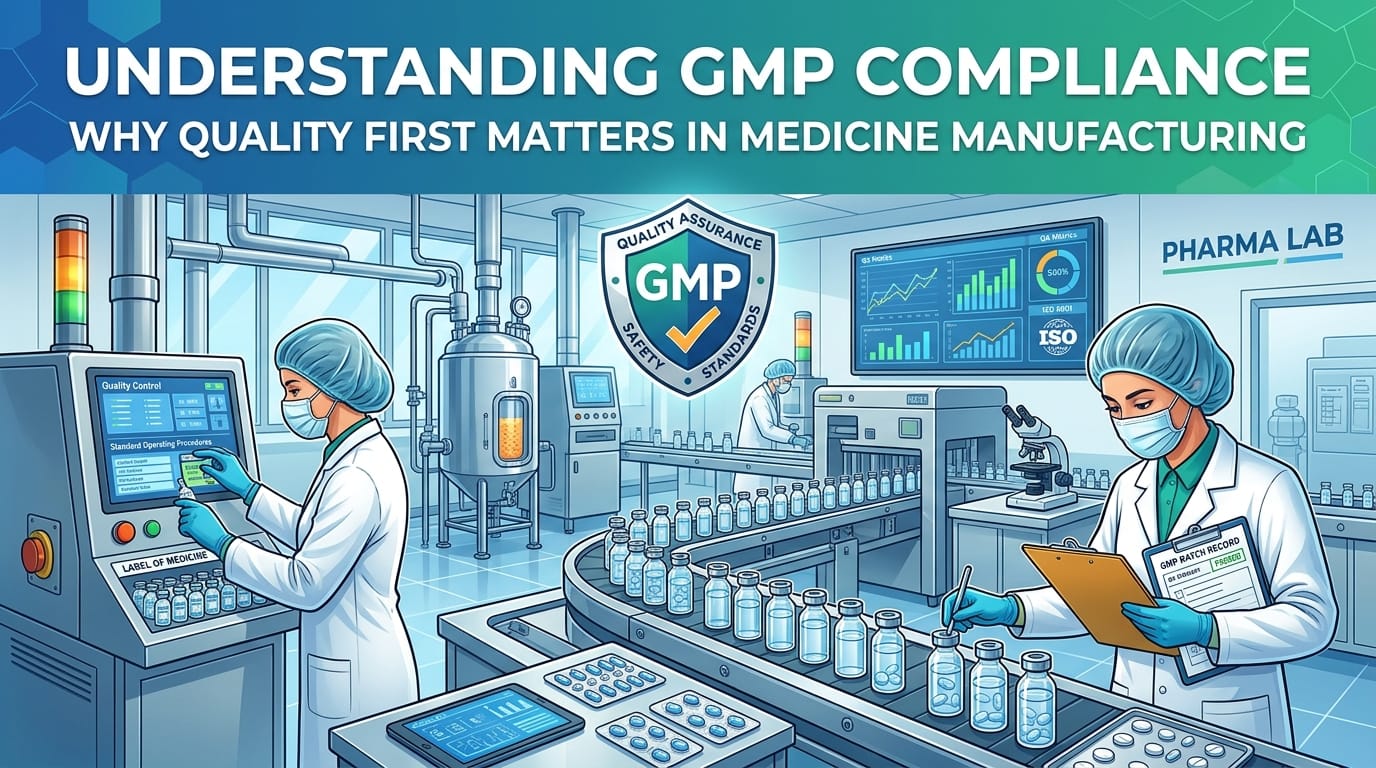
Understanding GMP Compliance: Why Quality First Matters in Medicine Manufacturing
Every tablet, capsule and syrup that reaches a patient carries an unspoken promise: that it contains exactly what the label says, in the right amount, free from contamination. Good Manufacturing Practice (GMP) is the system that keeps that promise.
What is GMP?
GMP is a set of standards that governs how medicines are produced and controlled. Rather than relying on testing the finished product alone, it builds quality into every step, from the raw materials that enter the facility to the packaging that leaves it.
In Nigeria, manufacturers are expected to meet the requirements set by NAFDAC, which align with the WHO-GMP guidelines used internationally.
Why quality comes first
Medicines are different from most manufactured goods. A flaw that would be a minor inconvenience in another industry can affect a patient's treatment outcome. Strict compliance helps ensure:
- Consistency: every batch performs the same way as the last.
- Safety: contamination and cross-contamination risks are controlled.
- Efficacy: the active ingredient is present at the correct strength.
- Traceability: any batch can be traced back through its full production history.
What compliance looks like in practice
Quality is not a single checkpoint. It runs through the whole operation:
- Materials: ingredients are tested and approved before use.
- Facilities and equipment: clean, controlled environments and regularly calibrated equipment.
- People: trained staff following documented procedures.
- Documentation: records that show what was done, when and by whom.
- Testing and release: each batch is checked against specification before it is cleared for distribution.
Our commitment
At Sagar Vitaceuticals, quality is not something we add at the end of the process. It is built into how we work, so that healthcare providers and patients can trust every product we deliver.